
Cat Vaccination Guide in Saudi Arabia: Key Vaccines and the Right Schedule
Learn about the cat vaccination schedule in Saudi Arabia, the most important core cat vaccines, the FVRCP vaccine, the rabies vaccine, the FeLV vaccine, and key tips after vaccination.
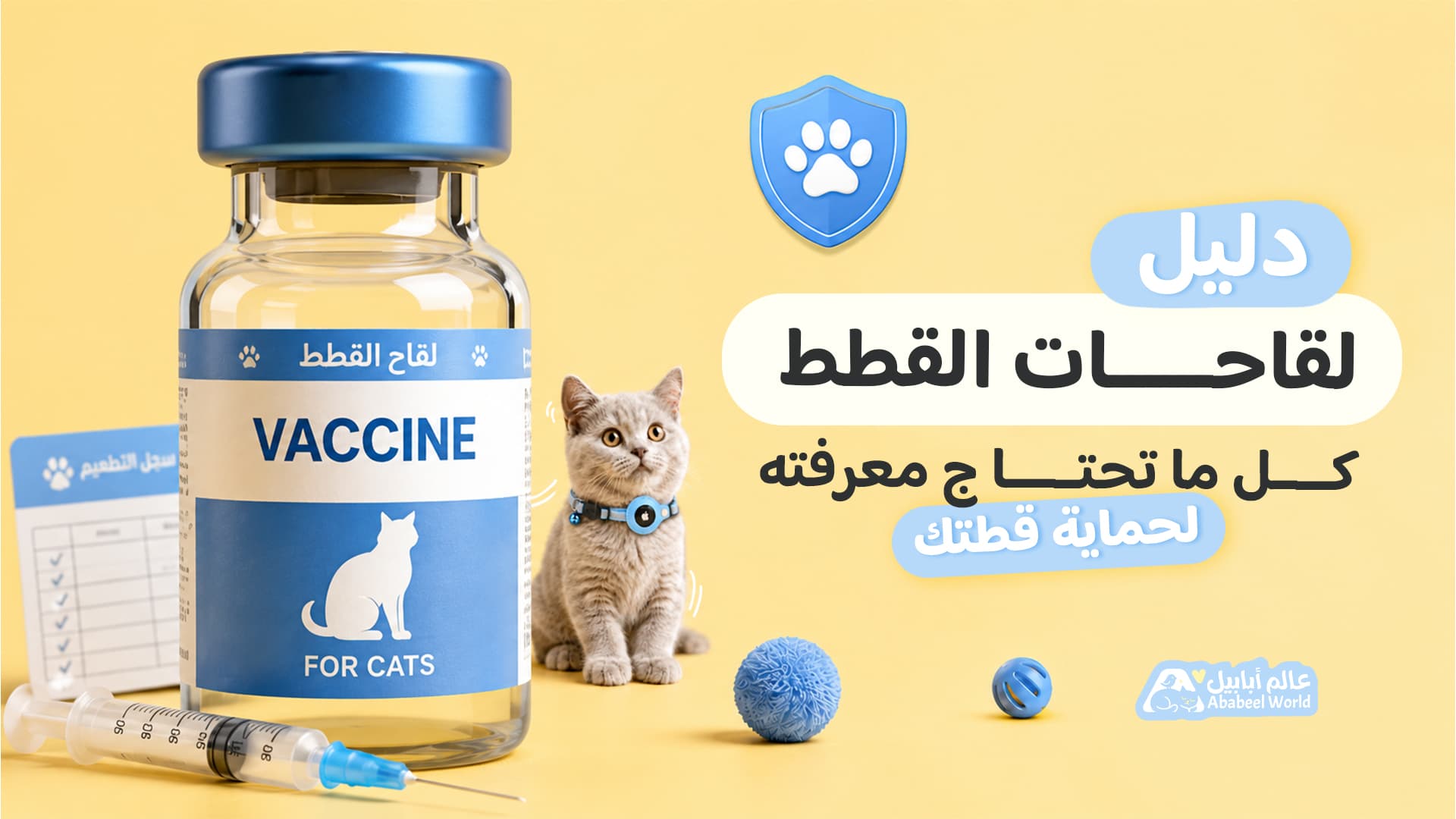
Vaccinating your cat isn't a luxury, and it isn't just a routine clinic procedure. It's an essential part of protecting your cat from infectious diseases that can be serious, fast-spreading, or life-threatening.
If you're keeping a cat in Saudi Arabia, you've probably wondered: When should I start vaccinating my cat? What are the most important cat vaccines? Does an indoor cat need vaccines? And do all cats need the same vaccination schedule?
The answer isn't the same for every cat. A cat's vaccination schedule depends on its age, health status, and lifestyle — whether it goes outdoors, and whether it mixes with other cats. So it's always best for a veterinarian to set the right plan after examining the cat.
In this guide you'll learn about the most important cat vaccines, the difference between core and non-core vaccines, the vaccination schedule for kittens and adult cats, and the key tips to follow after vaccination.
What Are Cat Vaccines?
Cat vaccines are medical preparations that help the immune system recognize serious disease-causing agents before they actually infect the cat.
In simpler terms, a vaccine trains the cat's body to fight off disease. So if the cat is later exposed to the virus or bacteria, its immune system is better prepared to handle it.
A vaccine doesn't mean the cat will never get sick, but it reduces the risk of severe infection, lessens complications, and protects young and vulnerable cats from diseases that can be fatal.
Why Does Cat Vaccination Matter?
Cat vaccination matters because it protects cats from highly contagious diseases, some of which can be fatal, and some of which can spread quickly between cats.
Even cats that live entirely indoors need basic protection. An indoor cat can be exposed to infection during a clinic visit, when a new cat enters the home, or through equipment, clothing, and shoes.
So the decision to vaccinate doesn't rest solely on whether the cat goes outside — it depends on a full assessment of its condition and lifestyle.
Types of Cat Vaccines
Cat vaccines fall into two main categories:
- Core vaccines
- Non-core vaccines
This classification matters because it prevents random vaccination and makes the vaccination plan suited to each cat's actual needs.
Core Vaccines for Cats
Core vaccines are the vaccines recommended for most cats, since they protect against serious or highly contagious diseases.
The most important core vaccines for cats include:
Feline herpesvirus vaccine (FHV-1)
Feline herpesvirus causes a common respiratory illness in cats. Symptoms can include sneezing, discharge from the nose and eyes, eye inflammation, poor appetite, and lethargy.
This virus spreads easily between cats, especially in places with more than one cat.
Calicivirus vaccine (FCV)
Feline calicivirus causes respiratory symptoms and painful mouth ulcers. Some infected cats may find it difficult to eat because of the pain.
This vaccine is usually included as part of the combination vaccine known as FVRCP.
Feline panleukopenia vaccine (FPV)
This disease is also known as panleukopenia or feline distemper. It's one of the most dangerous diseases that can affect cats, especially kittens.
The virus is highly contagious and can cause vomiting, diarrhea, severe lethargy, dehydration, and a sharp drop in white blood cell count.
For this reason, the FPV vaccine is one of the most important core vaccines for cats.
Rabies vaccine for cats
Rabies is a fatal disease and poses a risk to both animals and humans. That's why the rabies vaccine is considered very important, especially for travel, when a cat mixes with other animals, or when there are official vaccination requirements.
What Is the FVRCP Vaccine for Cats?
The FVRCP vaccine is the common combination vaccine for cats. It protects against three main diseases:
- FHV-1: feline herpesvirus
- FCV: feline calicivirus
- FPV: feline panleukopenia virus
This is one of the most important cat vaccines, and it usually starts at a young age, then is given over several doses until immunity is fully built up.
Vaccination Schedule for Kittens
The kitten vaccination series usually starts at 6 to 8 weeks of age.
The FVRCP vaccine is given every 3 to 4 weeks until the kitten reaches at least 16 to 20 weeks of age.
The doses are repeated at this age because kittens receive antibodies from their mother. These antibodies help them at first, but they can interfere with vaccine effectiveness if it's given too early. So the doses are repeated until the kitten's body can build effective immunity on its own.
A simplified kitten vaccination timeline
Cat's age — expected vaccination: 6 to 8 weeks — start of the FVRCP vaccine; every 3 to 4 weeks — repeated doses of the core vaccine; 16 to 20 weeks — initial series usually complete; after one year — booster dose; after that — depends on the vaccine type and the vet's assessment.
Vaccination Schedule for Adult Cats
Adult cats that have completed their core vaccinations need booster doses depending on their condition and the type of vaccine used.
In many cases, FVRCP and rabies boosters every 3 years can be enough after the initial series and the one-year dose. But this doesn't apply to every cat.
Cats that go outdoors, live with a large number of other cats, or enter boarding or breeding facilities may need a different schedule.
It's best for the vet to review the vaccination record and determine the appropriate doses.
Does an Indoor Cat Need Vaccination?
Yes, an indoor cat needs the core vaccinations.
Many owners assume that a cat that never leaves the house doesn't need vaccines. But that's not accurate. An indoor cat can be exposed to infection indirectly.
Some disease-causing agents can be transmitted through:
- A veterinary clinic visit
- A new cat entering the home
- Shoes or clothing
- Grooming tools
- Travel or a temporary stay at a pet hotel
So indoor cats need core protection, even if they never leave the house.
Non-Core Vaccines for Cats
Non-core vaccines aren't automatically given to every cat. The vet decides whether to use them based on risk level.
The most important of these vaccines:
FeLV vaccine for cats
FeLV is the feline leukemia virus. It can cause a serious, chronic illness in cats.
The FeLV vaccine matters for kittens, and for cats that go outdoors or live with other cats of unknown health status.
It's best to test for the virus before giving the vaccine, since if the cat is already infected, the vaccine won't be protective in the same way.
Chlamydia and Bordetella vaccines
These vaccines aren't usually given to every cat. A vet may recommend them in specific situations, such as shelters, breeding facilities, or environments with recurring outbreaks of respiratory disease.
If your cat lives alone indoors and doesn't mix with other cats, it may not need these vaccines.
Types of Vaccines by Manufacturing Method
Cat vaccines differ in how they're manufactured and how they work. This matters because each type has its own advantages and precautions.
Modified-live vaccines
These contain a live virus that has been weakened so it doesn't cause disease in a healthy cat.
This type can produce a strong immune response, but it isn't suitable for every cat. It's not usually used in pregnant cats or immunosuppressed cats, unless the vet decides otherwise based on the case.
Inactivated vaccines
These contain a killed virus or bacterium, so it can't replicate inside the cat's body.
They're a safer option in certain special cases, but they may need more booster doses, and some formulations may contain adjuvants to help stimulate immunity.
Recombinant vaccines
These are among the newer technologies. They don't use the whole virus, but rely on a specific piece that stimulates the immune system.
Some recombinant vaccines are adjuvant-free, which can reduce the risk of chronic inflammation at the injection site.
Normal Symptoms After Cat Vaccination
Some mild symptoms can appear after vaccination. In most cases they're temporary and not a cause for concern.
Common symptoms include:
- Mild lethargy
- Temporary loss of appetite
- A slight rise in temperature
- Mild soreness at the injection site
- Small swelling at the injection site
These symptoms usually disappear within 24 to 48 hours.
When Are Vaccination Symptoms Serious?
See a veterinarian immediately if your cat shows severe symptoms after vaccination, such as:
- Sudden swelling of the face or lips
- Difficulty breathing
- Severe vomiting
- Severe diarrhea
- Collapse or noticeable weakness
- Intense itching or strong signs of an allergic reaction
These symptoms can indicate an anaphylactic reaction. This is an emergency that needs prompt veterinary intervention.
Swelling After Cat Vaccination and the 1-2-3 Rule
Mild swelling can appear at the injection site after vaccination. In most cases it gradually goes away.
But any lump that appears at the injection site should be monitored, especially if it persists or grows.
See a vet if any of the following happens:
- The lump persists for more than 3 months
- It grows larger than 2 cm
- It keeps growing a month after vaccination
This rule helps catch any problem early.
What Should I Do After Vaccinating My Cat?
After vaccination, the cat needs rest. Its immune system is at work, and it may feel a bit lethargic for a short period.
Follow these tips:
- Provide a quiet space
- Monitor eating and drinking
- Don't bathe the cat for 7 to 10 days
- Avoid travel or introducing a new animal to the home for a week
- Keep an eye on the injection site
- Keep a vaccination record
These steps are simple, but they help the cat respond better after vaccination.
Can a Cat Be Vaccinated While Sick?
It's not advisable to vaccinate a cat that's sick, exhausted, or running a fever or active infection.
The vet examines the cat first. If a health issue is found, vaccination may be postponed until the cat improves.
The goal isn't to give the vaccine quickly — it's to give it at the right time.
How Does the Vet Determine the Right Vaccination Schedule?
The vet relies on several factors, including:
- The cat's age
- Its health status
- Whether it has had previous vaccinations
- Whether it lives indoors only
- Whether it goes outdoors
- Whether it mixes with other cats
- Whether it will be traveling
- Whether it will be staying at a pet hotel
- Whether it has any chronic illnesses
- Whether it's pregnant or immunosuppressed
That's why you shouldn't rely on a schedule from the internet alone. Use it as a general guide, then let the vet set the final plan.
Frequently Asked Questions About Cat Vaccination
When should I start vaccinating my cat?
Kitten vaccinations usually start at 6 to 8 weeks of age, with doses repeated every 3 to 4 weeks until 16 to 20 weeks of age.
Is the FVRCP vaccine necessary for cats?
Yes, the FVRCP vaccine is one of the most important core vaccines for cats. It protects against feline herpesvirus, calicivirus, and panleukopenia.
Do indoor cats need vaccination?
Yes, even indoor cats need core vaccinations, since they can be exposed to infection indirectly.
Does a cat get tired after vaccination?
A cat may feel a little tired after vaccination. Mild lethargy and reduced appetite for a day or two is common. If severe symptoms appear, see a vet.
Do cats need to be vaccinated every year?
Not always. Some vaccines need an annual booster, while others can be spaced up to 3 years apart, depending on the vaccine type, the cat's condition, and the vet's assessment.
Is the FeLV vaccine necessary for every cat?
Not for every adult cat. But it matters for kittens and for cats that go outdoors or mix with other cats.
Can a cat be bathed after vaccination?
It's best to avoid bathing a cat for 7 to 10 days after vaccination, since bathing can cause stress that affects the body's response to the vaccine.
Conclusion: What Should You Remember?
Vaccinating your cat is an essential step in protecting it from serious diseases. Start vaccination at 6 to 8 weeks of age, and don't skip the repeated doses in the first few months.
Ask the vet about the FVRCP vaccine, the rabies vaccine, and the FeLV vaccine if your cat is young or mixes with other cats.
Don't give your cat unnecessary vaccines without an assessment, and don't delay core vaccinations if the cat is healthy and ready for them.
Most importantly: keep a vaccination record, monitor your cat after every dose, and follow the vet's plan, since it's based on your cat's specific condition, not just a generic schedule.
This guide was prepared based on general veterinary information and vaccination guidelines published by trusted veterinary bodies. You can refer to the following sources for more detail:
- WSAVA dog and cat vaccination guidelines
- AAHA/AAFP feline vaccination guidelines
- AAHA core vaccines for cats
- The Merck/MSD Veterinary Manual
Note: the information in this article is for educational purposes only, and does not replace a veterinary exam or a vaccination schedule tailored to your cat's health status and lifestyle.
You may also enjoy

Cat Skin Diseases: Causes, Symptoms, and Care
Learn about the most common cat skin diseases, the causes of itching and hair loss, warning signs, and daily steps to care for your cat's skin health.
Read article
Best Cat Toys 2026 | A Complete Guide to Choosing the Right Toy for Your Cat
Discover the best cat toys, their types and features, and how to choose the right toy based on your cat's age and activity level to keep it healthy and reduce boredom and problem behaviors.
Read article
Best Cat Water Fountain 2026: Features, Types, and How to Choose the Right One for Your Cat
Discover the best cat water fountains, their types and features, and tips for choosing the ideal fountain for your cat to keep it healthy and active. Cleaning tips, filters, and a comparison of materials.
Read article