
Types of Bird Cages Compared: The Complete Guide to Choosing the Ideal Bird Cage (2026)
Your guide to choosing the ideal bird cage in 2026 — discover the right sizes for every type of bird, how to set up the cage, bird toys, and key tips to keep your bird active, healthy, and happy.
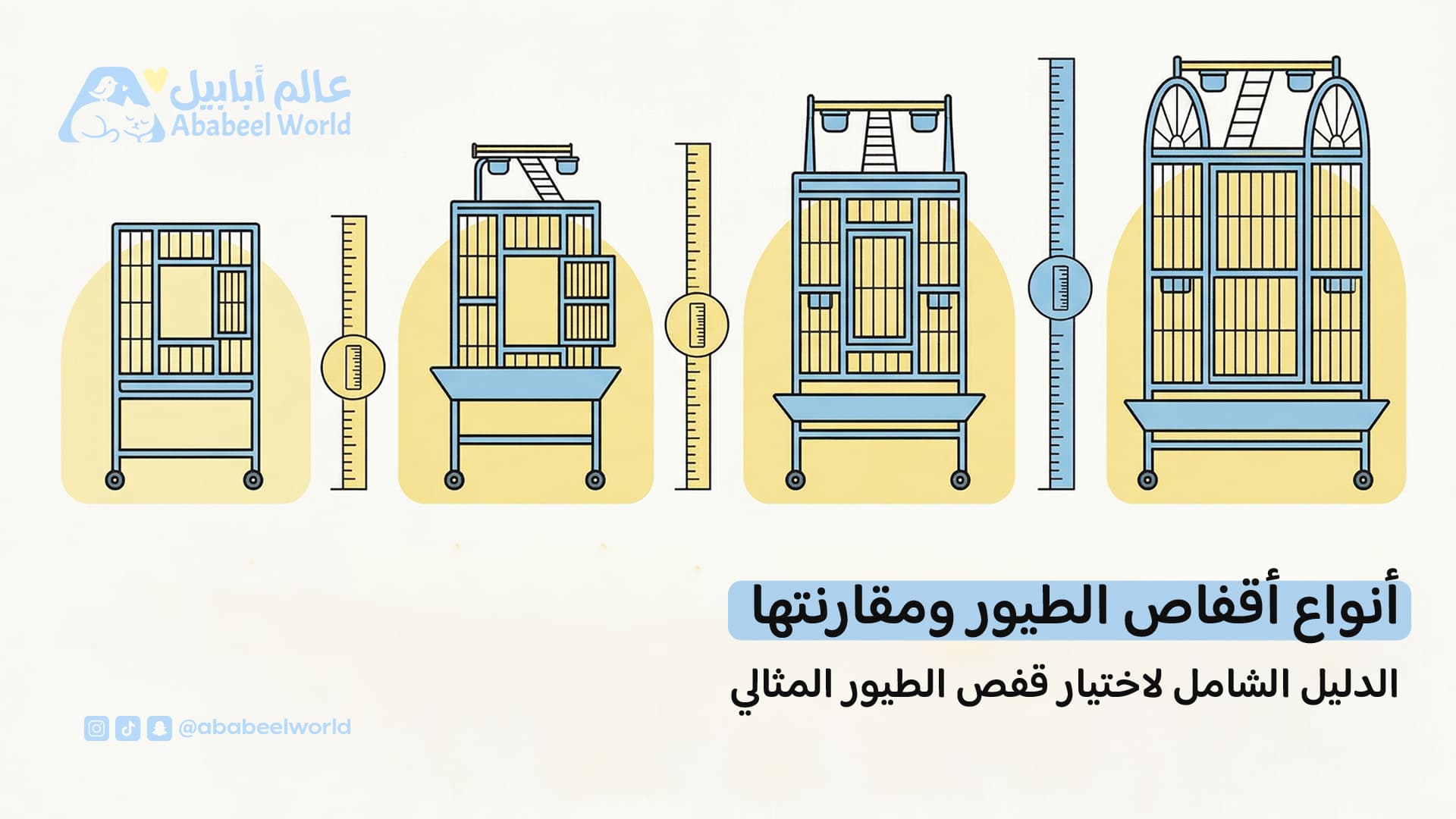
Choosing a bird cage is the most important step in keeping a bird healthy and happy at home. The cage is the bird's home, where it spends most of its time, so picking the right type and size has a direct effect on its physical activity, psychological health, and overall well-being.
An unsuitable cage can lead to:
- Ongoing stress and anxiety for the bird
- Cuts or bruises from an unsafe cage
- Health problems from poor ventilation or hygiene
In this guide you'll learn about:
- A full comparison of every type of bird cage
- The best sizes for each type of bird
- Setting up the inside of the cage and the best places to put it
- Common mistakes to avoid
- Tips for buying cages from Ababeel World
Types of Bird Cages
1. Metal (steel or iron) cages
Advantages:
- Sturdy and long-lasting, holding up for many years with simple maintenance
- Resistant to breaking and pressure, even for large or active birds like parrots
- Excellent ventilation that prevents heat stress and keeps the bird healthy
- Easy to clean, washable with soap and water or bird-safe cleaning products
- Suitable for most small, medium, and large birds, provided the right size is chosen
Drawbacks:
- Can rust if not well coated
- Make sure it's free of any harmful materials or sharp edges
Our tip for you:
- Keep the cage away from direct moisture
- Add liners under the cage to make cleaning easier
- Use perches of different sizes to strengthen the bird's feet
- Add safe toys to reduce boredom and encourage physical activity
2. Wooden cages
Advantages:
- Decorative and attractive inside the home
- Suit calm environments and reduce stress in shy birds
- Give birds a natural feel similar to the wild
Drawbacks:
- Hard to clean and quick to absorb odors
- Less sturdy compared to metal
- Not suitable for large or highly active birds
Our tip for you:
- Use these cages only for decoration or for calm birds
- Add a removable liner to make daily cleaning easier
- Avoid placing the cage in a damp spot to reduce damage or mold
3. Plastic cages
Advantages:
- Lightweight, easy to carry, and suitable for beginners
- Affordable and economical
- Good for travel or temporary use
Drawbacks:
- Less ventilation than metal
- Not suitable for long-term daily use
- Can break under large or active birds
Our tip for you:
- Use them for short trips or vet visits
- Make sure there are enough ventilation openings
- Add a soft inner lining to reduce the risk of injury
4. Large cages
Advantages:
- Spacious room to fly and move, reducing stress and improving mental health
- Ideal for parrots and active birds
- Allow the use of large toys and swings for the bird
Drawbacks:
- Need a large amount of space inside the home or a garden
- Higher priced compared to other cage types
- Need more cleaning and maintenance
Our tip for you:
- Place the cage in a stable spot away from drafts
- Add large toys and swings to encourage the bird's physical activity
- Make sure there's enough ventilation and room for full flight
Choosing the right cage size is an essential step for a bird's health and happiness, since a cramped cage leads to stress, poor movement, and long-term health problems.
The Best Sizes by Bird Type
Cage for small birds
- Suitable for: budgies, canaries, cockatiels, lovebirds, and peach-faced lovebirds
- Dimensions
Length: 155
Width: 67
Depth: 67
- Features
A practical cage for small birds with a sturdy, rust-resistant metal frame, fitted with wheels for moving it around, feed cups, and an easy-to-clean tray, with excellent ventilation and high safety.
Cage for medium birds
- Suitable for: medium birds and parrots such as African greys, macaws, conures, cockatoos, and ringnecks
- Dimensions
Length: 173
Width: 81
Depth: 76
Features
A spacious cage for medium birds, suitable for medium and large birds, with a sturdy frame and a secure door, fitted with an upper platform, ladders, a wooden perch, and stainless steel feed cups, along with wheels for moving it and an easy-to-clean tray, in an elegant design that suits any home.
- Our tip for you
Place the cage in a well-ventilated spot away from direct sunlight.
Cage for large birds
- Suitable for: parrots such as African greys, macaws, and cockatoos
- Dimensions
Length: 170
Width: 100
Depth: 78
- Features
A large cage with an elegant design and a strong, rust-resistant metal frame, fitted with an upper platform, ladders, wooden perches, and stainless steel feed cups, along with wheels for moving it, an easy-to-clean tray, and high safety, suited to large birds and providing a comfortable, practical environment.
- Our tip for you: arrange the perches and toys so the bird can move around freely.
Setting Up the Inside of the Cage
- Perches:
- Different sizes to strengthen the bird's feet
- Natural wood is preferable to avoid slipping
- Toys:
- To reduce boredom and stimulate mental and physical activity
- Must be safe and free of toxic materials
- Food and water bowls:
- Break-resistant and easy to clean
- Change the water daily to keep the bird healthy
- Liner:
- To make daily cleaning easier
- Keeps the cage clean and prevents germs from building up
The Best Places to Put the Cage
- Away from direct drafts
- Away from direct sunlight, to avoid heat stress
- A quiet spot, away from noise
- A height around eye level or a bit higher
Common Mistakes to Avoid
- Choosing a cage that's too small, restricting the bird's movement
- Focusing only on appearance without considering the interior space
- Ignoring the bird's species and its specific needs
- Not providing room for flying or daily activity
Tips for Buying a Bird Cage
- Choose a sturdy, rust-resistant material
- The interior space should allow the bird to fly fully
- Easy to clean, with a removable bottom tray
- Safety: no sharp edges or narrow gaps
- Toys and perches inside to encourage activity
Frequently Asked Questions
Q: What's the best cage for a budgie?
- A metal or medium-sized cage with enough room for flying, several perches, and small toys.
Q: How do I choose the right cage size for a parrot?
- Large birds need cages of at least 80 × 70 × 160 cm or larger, with enough bar spacing to avoid injuries.
Q: Should the cage be cleaned daily?
- Yes, to keep the bird healthy and prevent odors and germs from building up.
Q: Are plastic bird cages suitable?
- Suitable for travel or temporary use only — metal is better for daily use.
Q: What are the best materials for a multi-bird cage?
- Iron or steel, with separate sections for each bird to reduce conflict.
Conclusion
Choosing the ideal cage for your bird ensures a healthy, happy life, and boosts its activity and vitality at home.
To get the best bird cages and supplies at great quality and prices, visit now:the best bird cages
Ababeel World bird cages storeAbabeel World
You may also enjoy
Parrot Body Language: How to Understand What Your Bird Is Telling You (2026)
Learn to read your parrot's body language: eye pinning, feather fluffing, tail movements, and what biting really means — with a practical summary that helps you understand your bird in the moment and avoid getting bitten.
Read article
Raising the Indian Ringneck: The Complete Beginner's Guide (2026)
The complete guide to raising an Indian ringneck: the right cage size, the daily food pyramid, toxic foods, illness signs, and teaching it to talk step by step.
Read article
Weaning Bird Chicks: An Age Guide by Species (2026)
A complete step-by-step guide to weaning bird chicks: weaning ages for every species from budgies to African greys, readiness signs, and mistakes that threaten a chick's health. Read before you start.
Read article