
Weaning Bird Chicks: An Age Guide by Species (2026)
A complete step-by-step guide to weaning bird chicks: weaning ages for every species from budgies to African greys, readiness signs, and mistakes that threaten a chick's health. Read before you start.
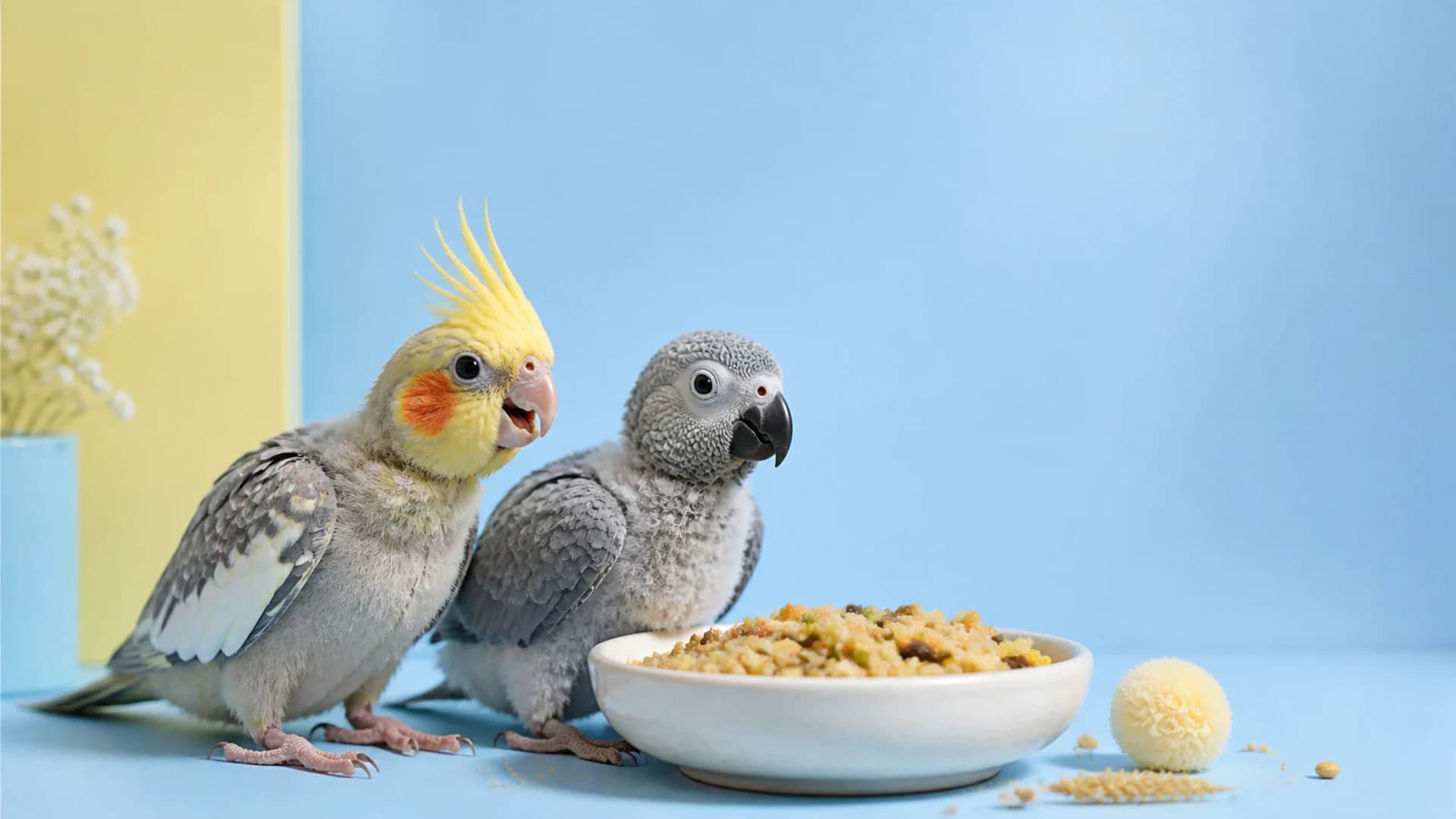
Weaning baby birds is the most delicate stage of a chick's life, and the number-one cause of weight and behavioral problems in pet birds when it's done incorrectly. The basic rule is simple: never cut off hand-feeding formula abruptly — instead, gradually reduce the number and size of formula feedings while thickening its consistency, and at the same time surround the chick with an environment rich in solid foods suited to its age and species. The goal is for the bird to discover food on its own, driven by curiosity and a controlled, moderate hunger — not by fear or force.
In this guide you'll find the precise weaning ages for each common species, from the fast-weaning budgie to the slow-weaning African grey, along with a practical strategy for each bird.
Quick Summary: Bird Chick Weaning Age by Species
- Budgie (Australian parakeet): Week 5–7 — easy
- Cockatiel: Week 6–8 — moderate
- Lovebirds (peach-faced and Fischer's): Week 6–8 — moderate but stubborn
- Conure (green-cheeked): Week 8–12 — easy
- Quaker parakeet (monk parakeet): Week 8–10, sometimes extending to 11 — moderate
- Indian ringneck parakeet: Week 10–12, sometimes extending to 14 — difficult
- Amazon: Week 12–16 — difficult
- African grey: Week 12–16, sometimes extending to 20 — the most difficult
- Cockatoo: Week 13–17 — difficult
- Macaw: Week 14–20 — difficult
💡 Important note: These ages are guidelines, not a strict rule. The real indicator of a chick's readiness is its behavior and weight, not its age in weeks — we'll cover this in detail at the end of the article.
Weight Monitoring: The Only True Measure of Weaning Success
Before getting into the details for each species, there's one tool you can't do without at this stage: a sensitive digital gram scale.
- Weigh the chick daily at the same time, ideally in the morning before the first feeding.
- A small, temporary weight dip of no more than 10% of body weight is normal and fully expected during weaning.
- A sharp, sustained weight loss means weaning is moving faster than the chick can handle, and you should immediately intervene by reinstating one or two formula feedings.
Weaning the Budgie: The Fastest and Easiest
The budgie is by far the fastest bird to wean, typically finishing between weeks five and seven. The secret to its ease is its intense curiosity; as soon as its feathers are complete and it can move around, it will start pecking at everything around it.
Practical strategy:
- Scatter millet seed directly on the cage floor, since budgies learn by pecking at the ground.
- Reduce formula feedings to twice a day, then once a day, while making the consistency very thick.
- Budgies usually don't need the "beaking" method (introducing the bird to food by tapping it with your finger), since they learn quickly and easily copy other birds.
Weaning the Cockatiel: Patience with a Sensitive Bird
Cockatiels are weaned between weeks six and eight, and can be a little sensitive at this stage; they may make begging calls when hungry, and that's normal.
Practical strategy:
- Offer millet and canary seed in shallow, open dishes so it's easy for the chick to reach.
- Hang dark leafy greens like spinach or arugula, dampened with water, inside the cage; cockatiels love playing with them before eating them.
- Don't skip the evening formula feeding in the first days of weaning — going to sleep on a full stomach prevents overnight weight loss and reduces stress.
Weaning Lovebirds (Peach-Faced and Fischer's): A Battle of Wills
Both are usually weaned between weeks six and eight, with Fischer's lovebirds sometimes lagging slightly behind peach-faced lovebirds. The core issue here isn't ability but stubbornness; the chick may refuse solid food simply out of defiance.
Practical strategy:
- Use the "beaking" method: tap your finger on the seed in front of the chick to introduce it, since lovebirds respond very well to this approach.
- Offer small seeds like canary seed or millet, or pieces of boiled corn to entice it.
- Don't lose hope if you see it playing with the seed and scattering it without eating; this is a normal part of learning.
⚠️ Dietary warning: avoid giving lovebirds sunflower seeds at this stage, or in large amounts later on, since they're high in fat and can lead to liver problems down the line.
Weaning the Quaker Parakeet (Monk Parakeet): Gently Breaking the Routine
Quaker parakeets are weaned between weeks eight and ten, and can extend to week eleven. This bird is stubborn by nature and gets attached to routine: if it's used to being syringe-fed in the morning, it will demand it every morning.
Practical strategy:
- Offer solid food first thing in the early morning, and push the formula feeding a little later to break the routine association.
- Use its love of chewing to your advantage: hang pieces of apple and raw carrot in the cage to occupy it instead of waiting for the syringe.
Weaning the Indian Ringneck Parakeet: Never Rush It
The Indian ringneck needs real patience. Chicks are weaned between weeks ten and twelve, sometimes even up to week fourteen. The risk here is clear: ringnecks are among the birds whose weight can drop alarmingly if weaning is forced.
Practical strategy:
- Keep offering formula feedings, but gradually reduce the amounts — never cut it off suddenly.
- Provide visually appealing solid food: boiled yellow corn still on the cob, pieces of colorful bell pepper, and grated carrot.
- Attach these foods to the cage bars and let the chick discover them on its own.
- Ringnecks learn by observation: if it sees you eating in front of it, it may try to copy you — use that to your advantage.
Weaning the African Grey: The Slowest and Most Sensitive
The African grey is by far the slowest of the common species to wean: weaning stretches from week twelve to sixteen, and some individuals continue until week twenty — which is completely normal and no cause for concern.
More important than the timeline is the psychological side: African greys are highly sensitive, and any pressure during weaning can cause a behavioral setback that's hard to undo later.
Practical strategy:
- Never let it go hungry, under any circumstances.
- Offer mashed boiled vegetables like sweet potato, carrot, and pumpkin; they're warm, soft, and remind the chick of the formula's texture, which makes the transition smooth.
- Soak parrot pellets in warm water or unsweetened natural apple juice so they become soft and easy to eat.
- Keep the evening formula feeding until its weight is fully stable and it's eating solid food regularly. Don't cut it off suddenly; the African grey will drop it gradually on its own when it's ready.
Weaning Large Parrots: Amazons, Macaws, and Cockatoos
Large parrots follow a pattern similar to the African grey, with different age ranges:
- Amazon: weaned between weeks twelve and sixteen.
- Cockatoo: weaned between weeks thirteen and seventeen.
- Macaw: weaned between weeks fourteen and twenty.
All of them need long patience, careful weight monitoring, and continuous emotional support. Always remember: at this stage, the chick isn't just learning how to eat — it's learning how to be an independent, confident bird. Your calm, reassuring presence beside it is an essential part of successful weaning.
Weaning the Conure (Green-Cheeked): A Pleasant Surprise
Conures are weaned between weeks eight and twelve, and despite their medium size, they're usually among the easiest parrots to wean. Their favorite weak spot: soft fruit.
Offer berries and grapes cut into halves alongside soaked pellets, and it will start eating on its own fairly quickly.
The Golden Rule: Behavior First, Then Age
There's no single magic age for weaning bird chicks. Every chick is an individual with its own pace, and the only true indicator of its readiness is its behavior, not its age in weeks. Only start gradually reducing feedings once you notice all three signs together:
- It starts pecking at and playing with food on its own.
- It refuses some formula feedings or takes them with clear disinterest.
- Its weight is stable or increasing at the daily weigh-in.
An extra week of patience during weaning isn't a delay — it's a real investment in the bird's physical and psychological health for years to come.
Related Articles You May Find Useful
- 🔗 For more trusted veterinary information on bird care, see the avian medicine section at VCA Animal Hospitals
Frequently Asked Questions About Weaning Bird Chicks
How do I know my chick is ready to be weaned?
When three signs appear together: it pecks at and plays with solid food, shows disinterest in some formula feedings, and its weight is stable or increasing. Age in weeks is only a rough guideline.
Is it normal for a chick to lose weight during weaning?
Yes, a temporary loss of no more than 10% of body weight is expected and normal. But any sharp or sustained loss means weaning is happening too fast, and you should immediately reinstate one or more formula feedings.
How long does it take to wean an African grey?
Usually from week 12 to 16, and it can extend to week 20 for some individuals, which is completely normal. Never rush an African grey, since pressure can cause a behavioral setback that's hard to undo.
Should I cut off formula abruptly once the chick passes its typical weaning age?
No, absolutely not. Cutting it off suddenly is a serious mistake no matter the chick's age. Reduce feedings gradually, thicken the consistency, and let the chick drop the formula on its own.
What is the "beaking" method for teaching a chick to eat?
It's introducing the chick to food by tapping your finger on the seed in front of it so it copies you. It's especially useful with stubborn lovebirds, while budgies usually don't need it.
Are sunflower seeds safe for chicks?
Avoid them for lovebirds during weaning, and offer them only in very limited amounts for other species, since they're high in fat and can cause liver problems over time.
⚕️ The dietary content in this article has been reviewed against best practices in bird care. The information here is for guidance only and does not replace consulting an avian veterinarian if you notice sharp weight loss or lethargy in a chick.
You may also enjoy
Parrot Body Language: How to Understand What Your Bird Is Telling You (2026)
Learn to read your parrot's body language: eye pinning, feather fluffing, tail movements, and what biting really means — with a practical summary that helps you understand your bird in the moment and avoid getting bitten.
Read article
Raising the Indian Ringneck: The Complete Beginner's Guide (2026)
The complete guide to raising an Indian ringneck: the right cage size, the daily food pyramid, toxic foods, illness signs, and teaching it to talk step by step.
Read article
African Grey Parrot Training: A Complete Scientific Guide to Taming and Teaching Speech
Learn to train an African grey parrot using modern, science-based methods built on positive reinforcement: taming, teaching speech, recall, and proper nutrition.
Read article