
Cockatiels in Saudi Arabia: Protect Your Bird From Common Care Mistakes
A comprehensive guide to keeping a cockatiel in Saudi Arabia: proper nutrition, the right cage, color mutations, safe toys, common illnesses, and warning signs.
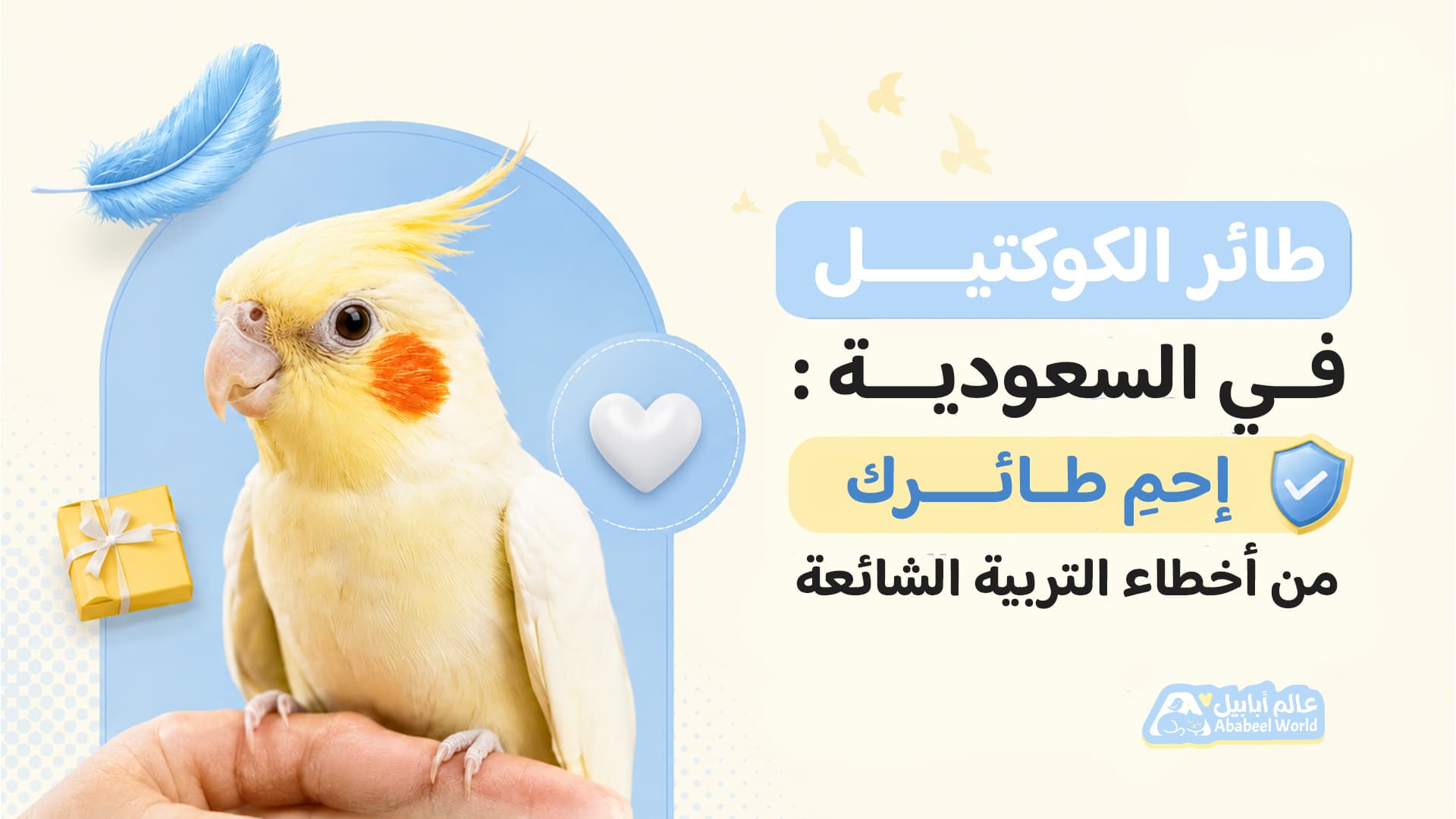
The cockatiel is one of the most popular ornamental birds in Saudi Arabia and the Gulf, thanks to its beautiful looks, intelligence, and ease of settling into a home. Whether you're considering buying a cockatiel for the first time or you already have experience keeping one, this guide walks you through everything you need to know about cockatiels, step by step.
This article is aimed at owners in Saudi Arabia, especially anyone who wants to know the right way to care for a cockatiel in the hot Gulf climate. Here you'll learn about the bird's needs in terms of
nutrition, cage, health, toys, and the key warning signs to watch for.
In this article we'll cover:
- What is a cockatiel?
- Cockatiel types and color mutations
- The right food for a cockatiel
- The best cage for a cockatiel
- Cockatiel toys and environmental enrichment
- Common cockatiel illnesses
- Hand-rearing chicks
- Important tips for keeping a cockatiel in Saudi Arabia
- Frequently asked questions about cockatiels
What Is a Cockatiel?
The cockatiel, scientifically named Nymphicus hollandicus, belongs to the small parrot family, and stands out for the crest on top of its head and its calmer voice compared to other parrots.
It's native to Australia, but has become one of the most popular ornamental birds in the world thanks to how easy it is to keep, its social nature, its intelligence, its ability to whistle and mimic sounds, and how well it suits beginners.
As cockatiel-keeping has grown more common in Saudi Arabia, it's become very important to understand its health and behavioral needs so it can live a healthy, long life.
Is the Cockatiel the Same as the "Karawan"?
Yes, many people in the market call it "karawan" or "tayer al-karawan," but the more accurate name is cockatiel.
So when you hear "cockatiel" or "karawan" at a bird shop, they usually mean the same bird. But in articles and scientific or veterinary content, it's best to use the name "cockatiel," since it's the more accurate and more widely searched name.
Cockatiel Characteristics
A cockatiel's length is roughly 30–33 cm, with the tail making up roughly half the total length. Its weight is usually between 70–120 grams, with males typically a bit heavier than females.
One of the cockatiel's most notable features is the crest on top of its head. This mobile crest is used by the bird to express its mood and emotions, and a raised crest usually signals curiosity or alertness.
The beak is strong and hooked, designed for cracking seeds and hard foods. It also helps the cockatiel climb and play, both inside and outside the cage.
Cockatiel Types and Color Mutations
There are many cockatiel color varieties, and some are very common in Saudi Arabia. The difference between them usually comes down to color, feather pattern, or genetic mutation.
Normal grey cockatiel
The normal grey cockatiel is the most well-known color. Males usually have a yellow head with clear orange cheek patches, and it's considered the base form of the cockatiel.
Lutino cockatiel
The lutino cockatiel is almost entirely yellow, with red eyes. It's one of the most popular varieties in Saudi Arabia, especially among owners who love bright, clear colors.
Pearl cockatiel
The pearl cockatiel features feathers decorated with a beautiful pearled pattern. This variety is popular among owners for its distinctive, eye-catching look.
White-faced cockatiel
The white-faced cockatiel lacks orange and yellow coloring entirely, giving it an elegant, distinctive look. Many owners prefer it because it gives a different appearance from the traditional cockatiel.
Cinnamon cockatiel
The cinnamon cockatiel has a grey color leaning toward brown, and it's a sex-linked mutation. Its look is soft and distinctive, and it's a lovely choice for fans of warm tones.
Pied cockatiel
The pied cockatiel shows random yellow and white patches. Every bird turns out a little different, which is part of what makes it appealing to some owners.
The Right Food for a Cockatiel
According to Dr. Eyas Mohammed, proper nutrition is the single most important factor for a cockatiel's health and lifespan. Many bird health problems start with relying on seeds alone or offering unsuitable foods.
Pellets
Pellets should make up roughly 60% to 80% of the daily diet. They're the foundation of the diet since they reduce picky seed-selection and give the bird better overall balance.
Suitable examples include:
- Roundybush
- Harrison's
- ZuPreem
Fresh vegetables for a cockatiel
Fresh vegetables should make up roughly 20% to 35% of the daily diet. Some of the best options:
- Carrot
- Cucumber
- Red bell pepper
- Broccoli
- Arugula
- Spinach, in moderation
Vegetables must be washed thoroughly before serving, and shouldn't be left inside the cage for a long time.
Fruit allowed for a cockatiel
Fruit should be offered in small amounts, roughly 5% to 10%, due to its sugar content. Suitable options include:
- Seedless apple
- Grapes
- Mango
- Berries
It's best not to overdo it, especially if the bird is less active or prone to weight gain.
Are seeds enough for a cockatiel?
No, seeds alone aren't enough.
Seeds such as millet and hulled oats should be used in small amounts, or only as rewards. Don't leave seeds in the cage all day, since over time they can lead to obesity and liver problems.
Calcium for a cockatiel
Calcium is very important, especially for egg-laying females. The best sources:
- A mineral/calcium block
- Cuttlebone
Foods Forbidden for Cockatiels
Some foods are completely forbidden for cockatiels because they can cause serious poisoning.
Never give your cockatiel:
- Avocado
- Chocolate
- Caffeine
- Alcohol
- Onion and garlic
- Sugar-free sweets containing xylitol
- Coffee and tea
These foods are very dangerous, and some can affect the heart, nervous system, or blood.
The Best Cage for a Cockatiel
Choosing the right cage matters a lot, since a cockatiel needs room to move, spread its wings, and rest.room to move
The minimum for one bird:
or roughly:
36 × 24 × 24 inches
Cage bar spacing
The right spacing between bars is roughly 1.3 to 1.6 cm. Don't exceed 1.8 cm, to avoid the bird's head getting caught.
Where to place the cage inside the home
It's best for the cage to be:
- Away from direct sunlight
- Away from AC units and fans
- Away from the kitchen and Teflon fumes
- In a relatively quiet spot
A cockatiel needs 10 to 12 hours of sleep a day, so it's best to cover the cage at night in a safe, quiet place.
Click here to discover the cages recommended by our veterinarian for cockatielsClick here to discover the cages recommended by our veterinarian for cockatiels
Suitable Perches for a Cockatiel
The best perches are made of natural wood in varying diameters, roughly 1.5 to 2 cm. Varying the diameter helps the feet and reduces constant pressure on the same points.
Safe tree branches, once cleaned and thoroughly dried, include:
- Eucalyptus
- Apple
- Mango
Cockatiel Toys and Environmental Enrichment
Toys are very important for a cockatiel, not just a nice extra. Toys help reduce stress, prevent feather plucking, and provide mental stimulation and physical activity.
The best cockatiel toys
You can make safe toys at home, such as an egg carton with vegetables tucked inside, natural twigs, clean toilet-paper rolls, or small cardboard boxes.
High-Quality, Well-Priced Toys at Ababeel World Recommended by Our Veterinarian for Cockatiels:
- Wooden climbing toy: a fun toy that helps a cockatiel climb and move around inside or outside the cage.
- Colorful wooden stand: an interactive perch that helps the bird stand, balance, and move its feet.
- Wooden bead toy: a light hanging toy that encourages the cockatiel to play and chew safely.
- Natural wood sticks: suitable for making simple toys or as safe chewing and enrichment material.
- Natural cotton balls: chew-and-shred toys that help reduce boredom and encourage the bird's natural behavior.
- Wooden perch with colorful beads: a practical toy that combines standing and play, and adds activity inside the cage.
How to introduce toys
Introduce one toy at a time, and let the bird get used to it gradually. Watch how it responds, and use rewards to encourage it.
Rotate toy placement periodically, and inspect them weekly. If you have any doubt about a toy's safety, don't use it.
Dangerous toys to avoid
Avoid toys containing:
- Lead
- Copper or zinc
- Long, unraveling ropes
- Poor-quality bells
- Brittle plastic
According to Dr. Eyas Mohammed, checking toys weekly matters a great deal, and any toy you're unsure about should be thrown out right away.
The Most Common Cockatiel Illnesses
A cockatiel can hide illness, which is why daily monitoring matters so much. According to Dr. Eyas Mohammed, any change in activity, appetite, or breathing needs prompt attention.
Knemidokoptic mange (scaly face/leg mite)
Symptoms include crusting around the beak, facial deformities, or itching. Treatment is usually done under veterinary supervision using ivermectin.
Salmonellosis
Symptoms include green diarrhea, lethargy, and loss of appetite. It needs veterinary care and an antibiotic depending on the case.
PBFD
Psittacine beak and feather disease is one of the most dangerous viral diseases. It can cause feather loss, a deformed beak, and weakened immunity.
Proventricular dilatation disease (PDD)
Symptoms include weight loss, neurological disturbances, and digestive problems. It needs close veterinary follow-up.
Hypocalcemia
Calcium deficiency can cause weak bones, egg-related problems in females, and sometimes seizures.
Obesity
Obesity is usually caused by excess fatty seeds and lack of movement. That's why balancing nutrition with toys and daily activity matters.
Feather plucking
Feather plucking is usually caused by boredom, stress, lack of interaction, or sometimes a health problem. Organic causes must be ruled out before treating it as a purely psychological behavior.
Danger Signs That Need a Vet Immediately
If you notice any of the following, don't wait:
- Severe lethargy
- Sitting on the cage floor
- Constant feather fluffing
- Loss of appetite for more than 12 hours
- Green or black diarrhea
- Difficulty breathing
- Repeated regurgitation
- Discharge from the nose or eyes
- The crop not emptying
These are danger signs, and need an immediate veterinary visit.
Hand-Rearing Cockatiel Chicks
Hand-rearing requires substantial experience and isn't suited to beginners. According to Dr. Eyas Mohammed, this process is risky and requires supervision by a specialist or veterinarian.
Required tools:
- A sterile syringe
- A precise scale
- A thermometer
- A hand-feeding formula made for chicks, such as Kaytee Exact or Roudybush
The right formula temperature for chicks is between 39–41°C. Any error in temperature or amount can cause a serious problem.
Crop stasis in cockatiels
Crop stasis is one of the most dangerous problems in chicks. Signs include the crop not emptying, lethargy, and digestion stopping.
This condition needs prompt veterinary intervention.
Important Tips for Keeping a Cockatiel in Saudi Arabia
Because of the hot climate in Saudi Arabia and the Gulf, you need to pay close attention to your cockatiel's environment at home.
In summer:
- Don't expose the cage to direct sunlight
- Provide excellent ventilation
- Provide clean water daily
- Mist lightly with water 2–3 times a week
- Change the water constantly
- Clean the cage floor daily
- Disinfect the cage weekly
Don't place the cage near the kitchen, since fumes from damaged non-stick (Teflon) cookware can be very dangerous for birds.
How Long Does a Cockatiel Live?
A cockatiel's average lifespan is 15 to 25 years, and with excellent nutrition and care it can live even longer.
But a long lifespan depends on nutrition, cage hygiene, toys, daily interaction, and health monitoring.
Is a Cockatiel Suitable for Beginners?
Yes, the cockatiel is one of the best choices for beginners, thanks to how easy it is to handle, its social nature, its quieter voice compared to large parrots, and its relatively lower cost.
But that doesn't mean it's a "no-responsibility" bird. A cockatiel needs daily attention, time for interaction, a clean environment, and a balanced diet.
Frequently Asked Questions About Cockatiels
Can cockatiels talk?
Some males can mimic tunes, whistles, and simple words. But cockatiels are better known for whistling and interacting than for clear speech.
Does a cockatiel need a companion?
Daily interaction is preferred, whether from a person or another bird. What matters is that it isn't isolated for long periods without interaction.
Can a cockatiel handle the heat?
It can tolerate heat up to a point, but in Saudi Arabia you need to provide shade, excellent ventilation, and clean water at all times.
What's the best food for a cockatiel?
Pellets combined with fresh vegetables are best, with a little fruit and seeds used only as rewards.
How often does the cage need cleaning?
Light daily cleaning, and a weekly disinfection.
Conclusion: A Cockatiel Needs Real Care
A cockatiel isn't just an ornamental bird — it's an intelligent, social creature that needs real attention and care.
If you provide it with the right nutrition, a good cage, safe toys, and health monitoring, it will live with you for many years and become part of the family.
Whether you're a beginner or an experienced bird keeper, following the right guidelines helps you keep your cockatiel healthy and prevent most common problems.
Start setting up a safe environment for your bird today, and check out Ababeel World's cockatiel supplies to choose the right cage, pellets, toys, and perches.
You may also enjoy
Parrot Body Language: How to Understand What Your Bird Is Telling You (2026)
Learn to read your parrot's body language: eye pinning, feather fluffing, tail movements, and what biting really means — with a practical summary that helps you understand your bird in the moment and avoid getting bitten.
Read article
Raising the Indian Ringneck: The Complete Beginner's Guide (2026)
The complete guide to raising an Indian ringneck: the right cage size, the daily food pyramid, toxic foods, illness signs, and teaching it to talk step by step.
Read article
Weaning Bird Chicks: An Age Guide by Species (2026)
A complete step-by-step guide to weaning bird chicks: weaning ages for every species from budgies to African greys, readiness signs, and mistakes that threaten a chick's health. Read before you start.
Read article